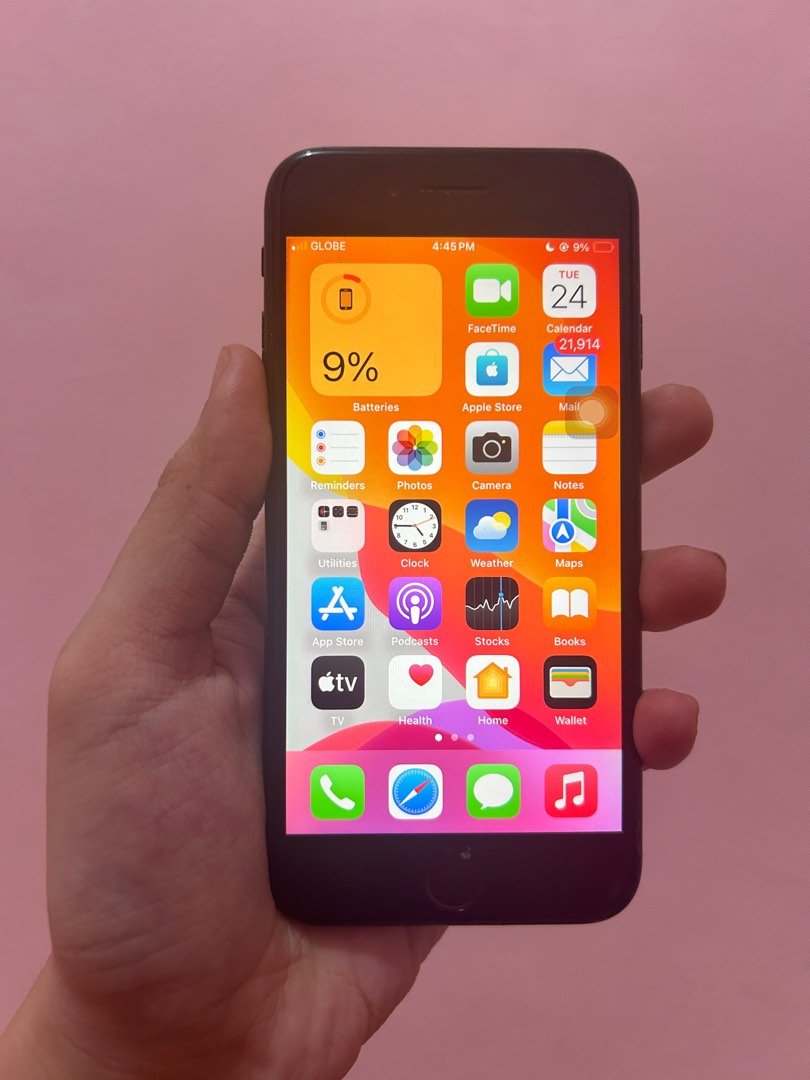
The iPhone SE (2nd Gen) hit the market in 2020, a compact powerhouse offering a slice of Apple's ecosystem without the premium price tag. Fast forward to today, and while it's no longer sold new, this model still generates significant interest. This comprehensive iPhone SE (2nd Gen) Overview & Review will help you understand if this discontinued device remains a smart buy, especially on the bustling used market. We'll cut through the noise, examine its strengths and undeniable weaknesses, and help you decide if its budget-friendly appeal outweighs its aging limitations.
At a Glance: iPhone SE (2nd Gen) Key Takeaways
- Release Date: April 2020 (now discontinued by Apple, available on used market).
- Processor: A13 Bionic chip (same as iPhone 11), still delivers zippy performance for everyday tasks.
- Design: Classic iPhone 8 form factor, 4.7-inch LCD screen, physical home button with Touch ID. Compact and familiar.
- Camera: Single 12MP wide-angle rear camera with software enhancements (Smart HDR). Good in bright light, struggles significantly in low light due to no Night mode.
- Battery Life: Noticeably shorter than larger iPhones; likely needs a midday charge for moderate to heavy users.
- Durability: IP67 water and dust resistance (can withstand submersion in 1 meter of water for 30 minutes). Glass front and back are prone to breakage.
- Charging: Supports inductive (Qi) wireless charging and fast charging via Lightning port (adapter sold separately).
- Key Limitations (CRITICAL for 2024+): Does NOT support iOS 26 or later, meaning it can't run the current major iOS version. Lacks modern features like Face ID, Apple Intelligence, Messages via Satellite, and future-proof software support.
- Best For: Extreme budget buyers, those who prefer Touch ID and a compact phone, users with basic needs who don't require the latest software features or extensive longevity.
The Enduring Allure of an Affordable Apple
There's something undeniably appealing about an iPhone that doesn't break the bank. For many, the iPhone SE (2nd Gen) represented that sweet spot back in 2020. It recycled a beloved design, packed a then-current flagship chip, and delivered the core Apple experience for hundreds less than its larger siblings. Now, primarily found on the used market, its price has plummeted even further, making it a tempting proposition for the truly budget-conscious.
But "tempting" doesn't always mean "wise." As technology relentlessly marches forward, what was once a bargain can quickly become a compromise. We need to dissect exactly what you're getting, and perhaps more importantly, what you're giving up, by opting for this model in today's landscape. The story of the iPhone SE is a fascinating one, marked by strategic choices across different models, which you can explore further by looking at the different iPhone SE generations.
iPhone SE (2nd Gen) Under the Hood: What You Get
Let's unbox the experience and see what the iPhone SE (2nd Gen) brings to the table.
Performance That Still Holds Up (Mostly)
At its heart, the iPhone SE (2nd Gen) houses the A13 Bionic chip, the very same processor found in the iPhone 11, 11 Pro, and 11 Pro Max. In 2020, this was a huge selling point: flagship-level performance in an affordable package. Today, the A13 Bionic remains surprisingly capable.
You'll find that apps launch quickly, games run smoothly (even graphically intensive ones, though perhaps not at their absolute highest settings), and everyday multitasking is a breeze. For browsing, social media, streaming video, and most casual gaming, the A13 still delivers a snappy, responsive experience. Where you might start to feel its age isn't so much in raw speed, but in its inability to run the latest software features. More on that critical point later.
That Familiar Feel: Design and Display
The iPhone SE (2nd Gen) is a direct descendant of the iPhone 8, which itself was an evolution of the iPhone 6. This means you get the classic iPhone design: a compact 4.7-inch Retina HD LCD display framed by noticeable bezels, and crucially, a physical home button with integrated Touch ID.
For many, this is a feature, not a bug. Touch ID is fast, reliable, and for some, preferable to Face ID, especially in scenarios like wearing masks or when the phone is resting on a desk. The compact size makes it incredibly easy to use one-handed and slip into even small pockets. It’s also one of the few contemporary iPhones with such a diminutive footprint.
However, "familiar" also means "dated." The thick bezels, while providing space for the home button, make the phone feel less modern than its full-screen counterparts. The 4.7-inch LCD screen, while bright enough for most conditions (625 nits max brightness) and offering good color accuracy, doesn't boast the deep blacks, infinite contrast, or higher resolution of OLED displays found on newer, more expensive iPhones. If you’re coming from an older device, it’ll be an upgrade, but if you’re used to modern screens, it will feel like a step back.
Camera Capabilities: More Than Just Megapixels?
On the back, the iPhone SE (2nd Gen) features a single 12MP wide-angle camera with an f/1.8 aperture. On the front, you get a 7MP f/2.2 selfie camera. On paper, this sounds modest, especially when compared to the multi-lens setups of premium phones. However, Apple's computational photography prowess, powered by the A13 Bionic chip, helps it punch above its weight.
In good lighting conditions, the SE (2nd Gen) takes excellent photos: sharp, well-exposed, with accurate colors and impressive dynamic range thanks to Smart HDR. Portrait Mode, available for people, works well, creating a convincing background blur. Video recording is also strong, supporting up to 4K at 60fps with optical image stabilization.
The Achilles' heel, however, is low-light performance. The iPhone SE (2nd Gen) utterly lacks Apple's Night mode, a feature that dramatically improves photos in dim conditions on other iPhones. Without it, images taken in low light are often grainy, noisy, and lack detail. The 7MP front camera also struggles in challenging lighting. While the A13 chip enables some software enhancements, it can't magically compensate for the absence of dedicated hardware or Night mode. If photography, especially after dark, is a priority, this phone will disappoint.
Powering Through Your Day (Or Not): Battery Life
Here’s where the iPhone SE (2nd Gen) shows its age most significantly. Its compact size necessitated a smaller battery (1,821 mAh), and while the A13 Bionic is efficient, it can only do so much. Apple rated it for up to 13 hours of video playback. In real-world usage, this translates to about 5 hours 57 minutes of video playback.
For light users, this might get you through a workday. However, for anyone who uses their phone moderately to heavily for browsing, social media, streaming, or gaming, you'll likely find yourself reaching for a charger by late afternoon or early evening. If you're buying used, a critical check is the "Battery Health" percentage in Settings > Battery > Battery Health & Charging. Anything below 85% will likely mean even shorter practical battery life, making a battery replacement almost essential for a good experience.
Durability and Convenience: Water Resistance & Charging
The iPhone SE (2nd Gen) carries an IP67 rating for water and dust resistance. This means it can survive being submerged in up to 1 meter of water for 30 minutes. It's not the higher IP68 rating of more expensive models, but it offers good protection against accidental spills, splashes, and rain.
Convenience also comes in the form of inductive (Qi) wireless charging, allowing you to power up without fumbling with cables. It also supports fast charging via the Lightning port, reaching 50% charge in about 30 minutes with a compatible 18W or higher power adapter (sold separately). A small but important note is that both the front and back are made of glass, which, while enabling wireless charging, also makes the phone more susceptible to damage from drops. A good case is highly recommended.
The Elephant in the Room: iOS Support and Future-Proofing
This is arguably the most critical section for anyone considering an iPhone SE (2nd Gen) in the current climate. Its discontinued status by Apple has profound implications for its longevity and usability.
No iOS 26 or Later: What This Means for You
As per Apple's software support cycles, the iPhone SE (2nd Gen) does NOT support iOS 26 or later. This is a game-changer. It means you will not be able to update to the current major version of iOS. While it still supports iOS 18 (which itself lacks certain features on this model), the inability to receive future major iOS updates is a significant drawback.
What does this translate to?
- Security Vulnerabilities: While Apple might release critical security patches for an older OS for a time, major OS updates bring comprehensive security enhancements that you'll miss out on.
- Missing Features: You won't get any of the new functionalities, UI improvements, or performance optimizations that come with newer iOS versions. This is particularly relevant now with the introduction of features like Apple Intelligence (AI), Messages via Satellite, Live audio transcriptions, Eye Tracking, and Music Haptics – none of which are available on the iPhone SE (2nd Gen) even when running iOS 18.
- App Compatibility: Over time, app developers will stop supporting older iOS versions. This might not happen immediately, but within a couple of years, you could find that new versions of popular apps require a newer iOS, or older versions stop receiving updates and new features. Eventually, some apps might cease to function altogether.
This lack of current and future software support severely limits the iPhone SE (2nd Gen)'s future-proofing. It transitions from an "affordable iPhone" to an "aging iPhone with limited software runway."
iPhone SE (2nd Gen) vs. Its Siblings: The 2022 SE (3rd Gen) and Beyond
When considering an older iPhone SE, it’s essential to understand how it stacks up against its direct successor and other options. The evolution of the iPhone SE provides a clear narrative of Apple's budget philosophy.
A Quick Look at the iPhone SE (2022)
The Apple iPhone SE (2022), often called the 3rd Gen, is Apple's most affordable current iPhone model. It keeps the exact same physical design as the 2020 model and the iPhone 8, meaning it has the same dimensions, 4.7-inch LCD screen, IP67 rating, camera hardware, and Touch ID. So, physically, they are indistinguishable save for color options (Midnight, Starlight, and Red for the 2022 model).
The key improvements in the 2022 SE are under the hood:
- A15 Bionic Processor: A significant performance jump from the A13, ensuring iOS upgrades for at least five more years. This is the same chip found in the iPhone 13 lineup.
- 5G Network Support: This is a major connectivity upgrade, allowing for faster data speeds in mid-band 5G covered areas. However, it lacks millimeter-wave 5G and uses a 2x2 MIMO setup (compared to 4x4 MIMO on premium iPhones), so its 5G performance isn't top-tier.
- Notably Better Battery Life: Thanks to the A15's efficiency, the 2022 SE offers about 7 hours 20 minutes of video playback, a marked improvement over the 2020 model's 5 hours 57 minutes. While still shorter than other current iPhones, it's a step up.
Despite the A15, the 2022 SE still lacks Night mode for its camera, and its front-facing camera also struggles in low light compared to premium models.
Why You Might Still Pick the 2nd Gen (on a budget)
The primary, and almost sole, reason to choose the iPhone SE (2nd Gen) over the newer 2022 model today is price. On the used market, you can find the 2nd Gen for significantly less than the starting price of a new iPhone SE (2022) ($429 for 64GB). If your budget is extremely tight, and you prioritize a compact iPhone with Touch ID above all else, even at the cost of software longevity and modern features, the 2nd Gen might seem appealing.
Why You Should Consider the 3rd Gen (or higher)
For most users, especially if you plan to keep your phone for more than a year or two, the iPhone SE (2022) (3rd Gen) is a far better investment. The A15 chip and guaranteed software updates for several years provide crucial longevity. The 5G connectivity is also a significant upgrade, even if it's not the absolute fastest 5G implementation. The improved battery life alone makes for a much more practical daily driver.
If your budget allows, even stepping up to an older flagship like a used iPhone 12 or 13 mini would offer dramatically better cameras (especially Night mode), Face ID, more modern designs, and OLED screens, alongside better battery life than either SE model. For the ultimate experience, the iPhone 16 (currently $799) remains the Editors' Choice winner for most iPhone buyers, offering superior features, performance, and future-proofing. Understanding these alternatives is part of a broader look at which iPhone SE generation is right for you.
Buying Smart: What to Look for in a Used iPhone SE (2nd Gen)
Since the iPhone SE (2nd Gen) is discontinued, your only option is the used market. Buying used can be a minefield, but with careful inspection, you can snag a decent deal.
- Battery Health: This is paramount. Navigate to Settings > Battery > Battery Health & Charging. Look for "Maximum Capacity." Anything below 85% will result in a noticeably degraded experience, and you should factor in the cost of a replacement battery (typically $70-90) into your budget. Ideally, aim for 90% or higher.
- Screen Condition: Check for cracks, deep scratches, dead pixels, or discoloration. Ensure the Touch ID sensor works perfectly. Be wary of screens that look "off" or have poor color reproduction; they might be cheap third-party replacements.
- Physical Condition: Inspect the body for significant dents, deep scratches, or signs of water damage (e.g., rust in the Lightning port, a red indicator in the SIM tray). While IP67 rated, water resistance can degrade over time or with repairs.
- Carrier Lock Status: Confirm the phone is "unlocked" or compatible with your specific carrier. A carrier-locked phone will only work with that carrier.
- Activation Lock: Ensure the previous owner has fully signed out of their iCloud account and disabled "Find My iPhone." If not, the phone will be activation locked and useless to you. Ask for proof of this if buying online.
- Functionality: Test all buttons (volume, power, home button), the cameras (front and back), speakers, microphone, Wi-Fi, and cellular connectivity (make a test call).
- Software Version: While you can't update to the latest major iOS, ensure it's running iOS 18 (the last major supported version) if you want the best possible experience it can offer.
Is the iPhone SE (2nd Gen) Right for You in 2024 (and Beyond)?
Let's distill who should consider this device and who should steer clear.
Who it's perfect for:
- The Extreme Budget Shopper: You need an iPhone, your budget is exceptionally tight, and a used SE (2nd Gen) is the absolute cheapest entry point.
- The Compact Phone Enthusiast: You genuinely prefer the small size, light weight, and one-handed usability that modern phones often sacrifice.
- The Touch ID Devotee: You prefer the reliability and familiarity of a physical home button and fingerprint scanner over Face ID.
- The Basic User: Your needs are limited to calls, texts, social media, light browsing, and occasional photos in good lighting. You don't demand the latest apps or features.
- A "Throwaway" or Secondary Device: You need a functional backup phone or a device for specific, limited tasks where longevity isn't a primary concern.
Who should steer clear:
- Anyone Seeking Longevity: The lack of current iOS support means this phone has a rapidly diminishing software lifespan. App compatibility will dwindle, and security updates will eventually cease.
- Photography Enthusiasts: The absence of Night mode and a single-lens system means poor low-light photos and less versatility than even mid-range Android phones.
- Heavy Users or Mobile Gamers: The battery life is simply too short for demanding use, and you'll constantly be tethered to a charger.
- Users Who Value Modern Features: No Face ID, no always-on display, no MagSafe, no 5G, and no new iOS features like Apple Intelligence means you're missing out on key advancements.
- Anyone Who Cares About Future App Support: If you want new apps to work for years to come, or existing apps to continue receiving updates, the SE (2nd Gen) is a risky bet.
Making the Call on a Classic
The iPhone SE (2nd Gen) stands as a testament to Apple's ability to repurpose and repackage. In 2020, it was a smart, affordable choice. In 2024 and beyond, it's a device caught in a challenging phase of its lifecycle. Its performance remains decent for basic tasks, its size is appealingly compact, and Touch ID is still a beloved feature for many.
However, the looming shadow of discontinued iOS support is a critical factor that cannot be ignored. This isn't just about missing out on fun new features; it's about future app compatibility and, eventually, security. For the truly budget-strapped buyer who understands and accepts these limitations, and finds a used model in excellent condition for a rock-bottom price, it can still serve a purpose.
But for most, the wiser move is to save up a bit more for the iPhone SE (2022) for its longevity and 5G, or consider a slightly older flagship iPhone for a more complete experience. The iPhone SE (2nd Gen) had its moment in the sun, and while it might still glimmer faintly, its brightest days are certainly behind it. Making the right choice means aligning its current capabilities and future limitations with your own needs and expectations. Ultimately, navigating the wide world of iPhone SE generations requires careful consideration of both price and performance.